
How to improve aim in fps games usually comes down to a few controllable habits: stable settings, clean crosshair placement, and a practice loop you can repeat without burning out. If your aim feels “random” from day to day, you’re not alone, most players aren’t missing knowledge, they’re missing a system.
The good news is you don’t need a 2-hour routine or some magic sensitivity number. What you need is to separate mechanical skill from decision-making, train each on purpose, then bring them back together in real matches.
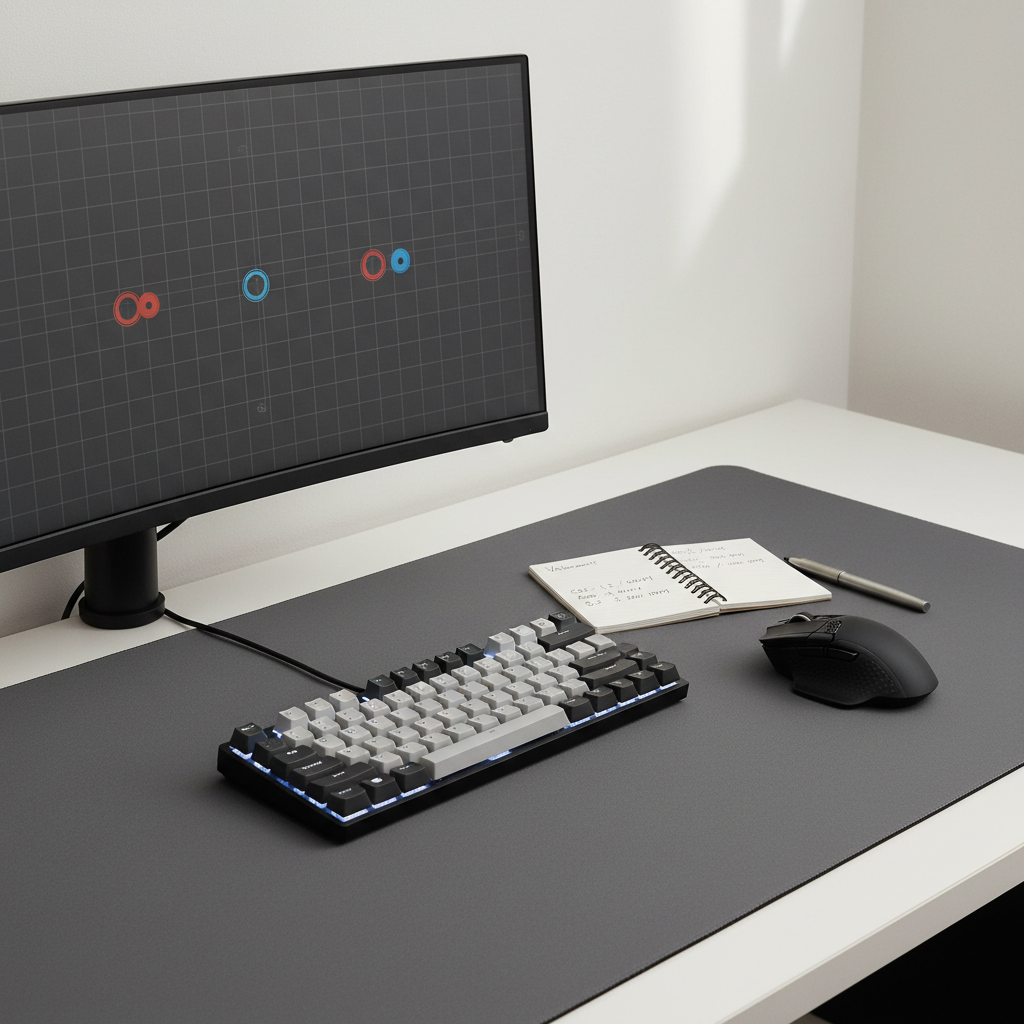
Below is a practical guide that focuses on what actually moves the needle for most FPS players: settings you can trust, drills that translate, and a weekly plan that fits normal life. I’ll also call out common traps, because “more practice” can be a waste if it’s the wrong practice.
Why your aim feels inconsistent (even if you practice)
Aim inconsistency often looks like a “mechanics problem,” but in real matches it’s usually a mix of small issues stacking together. Fixing just one sometimes helps, fixing the right two or three almost always feels dramatic.
- Sensitivity is unstable (you keep changing it, or it’s too fast to control under pressure).
- Crosshair starts in bad places, so every fight requires a big correction instead of a tiny adjustment.
- Tracking and clicking are trained in isolation, but your game demands movement, peeks, recoil, and target switching.
- Warm-up is missing, so your first 3–5 matches are your “practice,” and the rest of the session you’re chasing confidence.
- Hardware friction (mousepad too small, mouse feet worn, inconsistent FPS, or wildly changing frame pacing).
According to NVIDIA, consistent low latency and stable frame delivery can affect how responsive aiming feels, which is why some players improve simply by smoothing out performance before they touch training.
Quick self-check: what kind of aimer are you right now?
Before you copy someone else’s routine, get honest about what breaks in your fights. Use this quick checklist and pick the dominant pattern, not every pattern.
- You overflick past targets and “correct back” a lot → sensitivity/control issue or poor stopping discipline.
- You’re close, but always slightly off → crosshair placement and micro-adjustments need work.
- You lose long sprays but tap well → recoil and tracking under sustained fire.
- You win aim duels in DM, lose in ranked → positioning, peeking, and timing are sabotaging mechanics.
- You start strong then fall apart → fatigue, grip tension, or training volume mismatch.
Write down one sentence: “I usually lose fights because ______.” Keep it visible during practice. It sounds simple, but it stops you from drifting into random drills.
Lock in settings you can trust (don’t chase pro numbers)
If you want to know how to improve aim in fps games faster, stop changing variables. Your brain learns patterns, and constant tweaks reset that learning. Aim training works best when your setup stays boring.
Sensitivity and DPI: pick a range you can control
Most players do better when sensitivity supports both a controlled 180 turn and stable micro-aim. Exact values vary by game, mouse space, and comfort, so treat this like fitting shoes.
- Choose one DPI (800 or 1600 are common) and stick with it.
- Adjust in small steps and test for 2–3 days before changing again.
- If your hand tenses in fights, your sens may be too fast for your current control.
Crosshair, FOV, and graphics: reduce visual chaos
- Crosshair: simple, high contrast, minimal bloom/animation if the game allows.
- FOV: consistent with your game’s norms, changing it often can throw off perceived speed.
- Performance: prioritize stable FPS and low input lag over prettier settings.
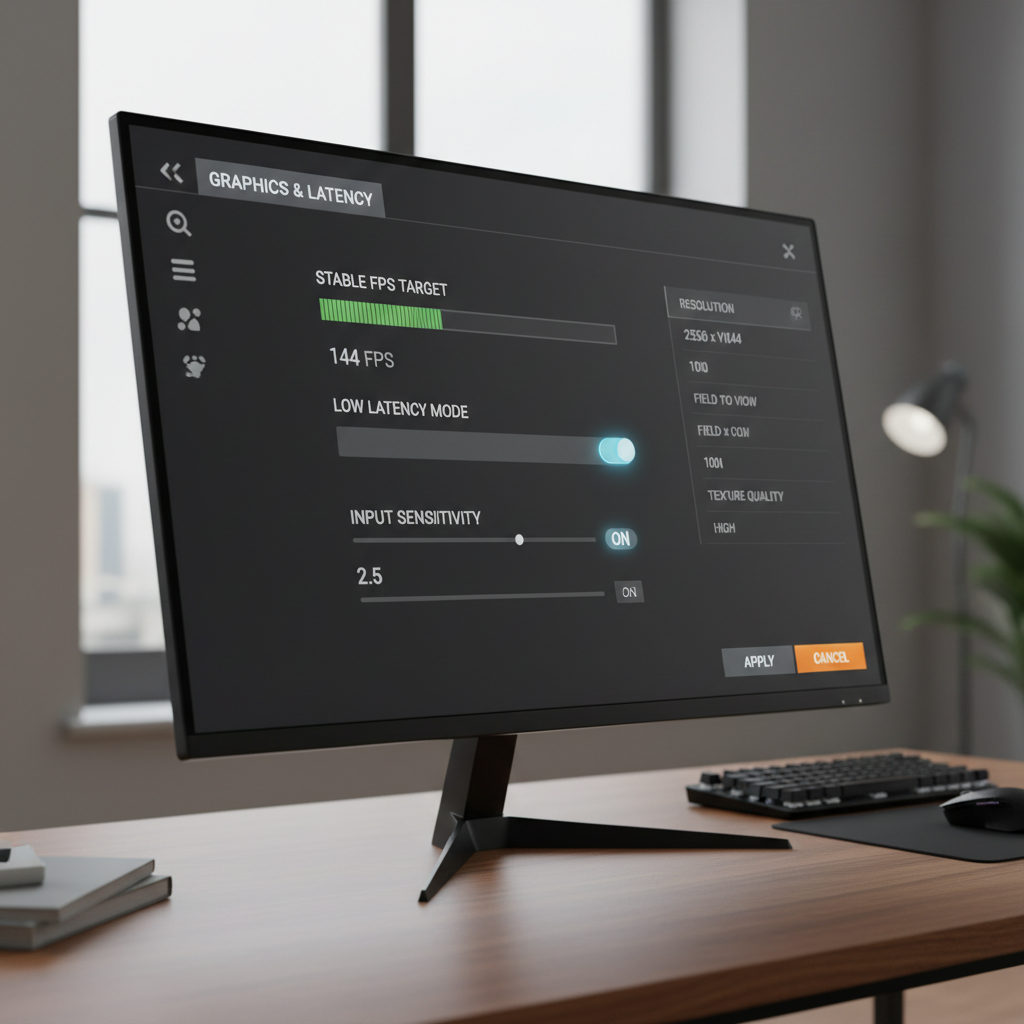
One more thing people underestimate: mousepad space. If you’re constantly lifting the mouse mid-fight, your sens and physical space aren’t aligned.
The aim fundamentals that actually translate in matches
Aim is not one skill. It’s a bundle. When players say “my aim is bad,” they usually mean one of these is undertrained.
1) Crosshair placement (the cheapest improvement)
Crosshair placement means your crosshair “waits” where an enemy head or upper chest is likely to appear. If you do this well, you don’t need hero flicks. You need tiny corrections.
- Keep crosshair at head height while moving, not on the floor.
- Pre-aim common angles before you swing a corner.
- Use map landmarks to maintain height consistency (railings, door frames).
2) Micro-adjustments (winning the last 5%)
This is the small, controlled movement after you’re already close. People who “look cracked” often just have cleaner micro-corrections and better stop timing.
- Practice slow accuracy, not only speed.
- Focus on stopping the mouse cleanly, then clicking.
3) Tracking, target switching, and recoil control
Different games reward different mixes. Apex leans tracking, Valorant rewards first-bullet accuracy and disciplined bursts, CoD often blends tracking with recoil management. Train what your game demands most.
A simple training plan (30–45 minutes, 4–5 days/week)
Consistency beats marathon sessions. The goal is to show up, do the same core work, then get reps in real fights. Here’s a plan many players can actually keep.
| Block | Time | What you do | What it trains |
|---|---|---|---|
| Warm-up | 8–10 min | Easy tracking + easy clicking, smooth movements | Hand warmth, control, confidence |
| Core drill | 12–15 min | One weakness focus (micro, tracking, or switching) | Skill building, not ego scores |
| In-game translate | 10–15 min | DM / range / bot routine with game weapons | Crosshair placement + recoil timing |
| Matches | Optional | Play, but track one focus goal | Decision + mechanics together |
Key point: you’re not trying to “set records” in practice. You’re trying to make your average better, because matches punish inconsistency.
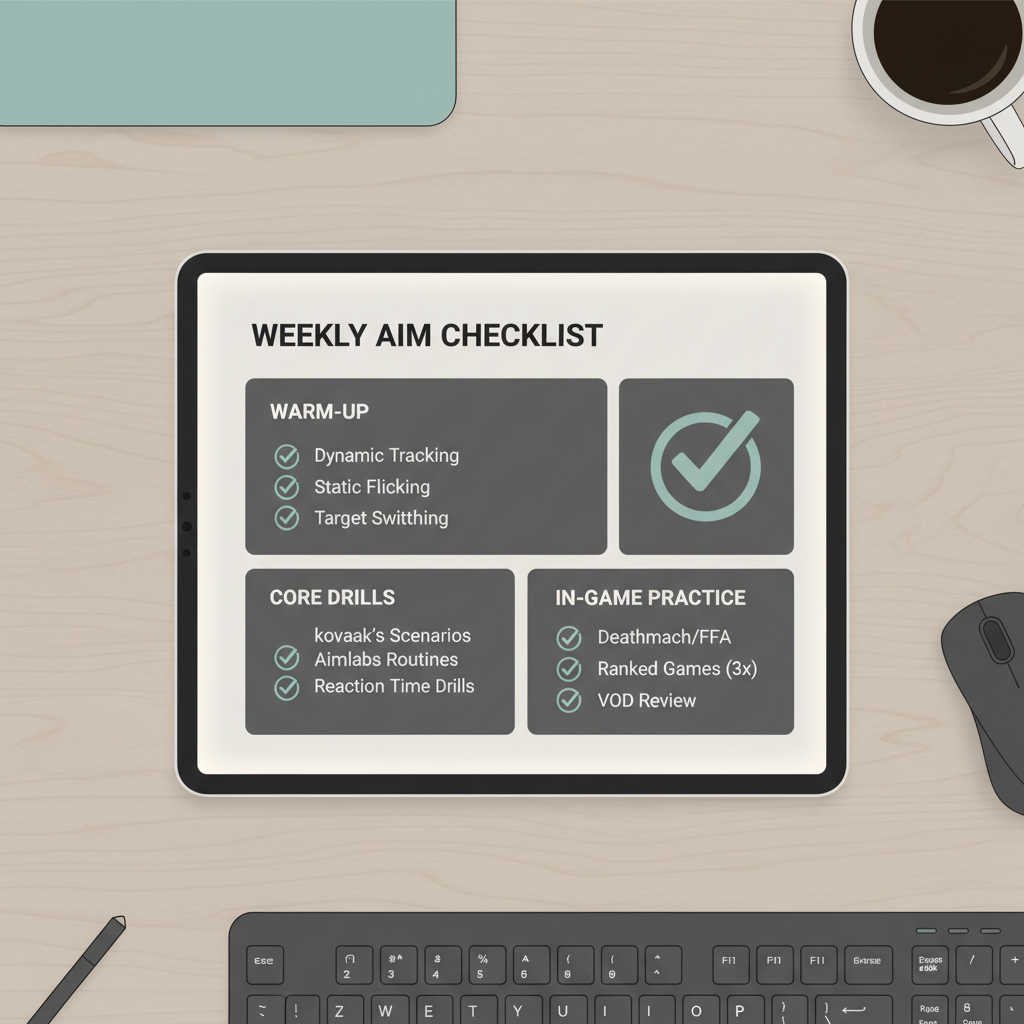
Practical drills you can run today (and what to focus on)
If you’re using an aim trainer, pick scenarios that match your weakness. If you’re not, you can still do most of this in your game’s practice range or DM.
Micro-aim (for “I’m always barely missing”)
- Do slow, small target clicking, prioritize clean stops over speed.
- In-game: hold angles and practice tiny corrections instead of wide swings.
Tracking (for “I can’t stay on target”)
- Track smoothly without jitter, keep grip pressure low.
- In-game: strafe while tracking a bot, then reverse strafe and keep aim stable.
Target switching (for “I panic in multi-enemy fights”)
- Two targets, controlled snap, confirm crosshair, click.
- In-game: short bursts on one target, immediate controlled transfer to the next.
When people ask how to improve aim in fps games, they often skip the boring part: review. Once per week, watch 10 minutes of your own VOD and mark which miss type shows up most.
Common mistakes that waste practice time
- Changing sensitivity every session, you never adapt long enough to build reliable motor patterns.
- Only doing flick drills, you get good at flicking, not necessarily good at winning fights.
- Grinding while tense, tension teaches your body the wrong “default” under stress.
- Ignoring movement and peeks, your crosshair can be fine, but your entry timing makes you miss.
- Confusing aim with decision-making, taking low-odds fights feels like bad aim, even with solid mechanics.
According to USA Track & Field coaching principles, skill development typically benefits from consistent, repeatable technique and manageable training load. While FPS aim isn’t track training, the idea applies: repeatable reps beat chaotic reps.
When it’s worth getting extra help (or changing your setup)
If you’ve been consistent for a few weeks and your aim still feels “stuck,” it might not be your drills. Consider a deeper check when:
- Your FPS drops or stutters during fights, even after basic optimization.
- Your wrist or forearm hurts, or numbness shows up, in that case, it’s smart to reduce volume and consider asking a healthcare professional.
- You can aim well in training but not in matches, a coaching review can spot peeking, positioning, and timing issues fast.
Sometimes the most honest fix is also the least glamorous: a larger mousepad, more stable frame rate, and a routine you can repeat without pain.
Conclusion: build a routine, not a mood
If you take one thing from this guide, let it be this: how to improve aim in fps games is less about secret drills and more about removing randomness. Lock your settings, train one weakness at a time, then translate that skill in real in-game reps.
Pick your plan for the next 7 days: 30–45 minutes, 4–5 sessions, one focus goal, and one weekly VOD check. If you do that, improvement tends to feel quieter, but a lot more real.
FAQ
How long does it take to improve aim in FPS games?
Many players notice better consistency within a couple weeks if they keep settings stable and practice 4–5 days per week. Big jumps often take longer because match pressure and decision-making need time too.
Should I lower my sensitivity to aim better?
Lower sensitivity can help if you overflick or feel shaky, but too low creates its own problems like slow turns and constant mouse lifting. A controllable middle range usually works better than extremes.
Is aim trainer practice enough on its own?
Aim trainers build mechanics, but you still need in-game reps for recoil patterns, movement timing, and real angles. A short “translate” block inside your game tends to make training stick.
Why is my aim good in deathmatch but bad in ranked?
Ranked adds stakes, utility, and worse fight selection. Often you’re taking harder duels, swinging at bad times, or getting pre-aimed, which feels like aim loss but is really positioning and timing.
What’s the best warm-up before competitive matches?
Keep it short and calming: a few minutes of easy tracking and clicking, then 10 minutes of in-game range or DM with your main weapons. The goal is control and confidence, not peak scores.
Does higher FPS actually help aim?
Higher and more stable FPS often makes input feel more responsive, especially when frame pacing is consistent. According to NVIDIA, reducing latency can improve responsiveness, which many players experience as “cleaner aim.”
How do I stop tensing my hand during fights?
Reduce practice intensity, slow down drills, and pay attention to grip pressure. If pain or persistent discomfort shows up, it’s wise to scale back and consider professional guidance.
If you’re trying to improve without turning your evenings into a second job, a structured routine and a quick settings audit usually beat endless drill-hopping. If you want, share your game, current sens/DPI, and what you miss most often, and I can help you narrow it to a simple weekly focus.