
Top games with procedural generation 2026 is a search that usually means one thing: you want a game that stays fresh after the first weekend, not a map you memorize and burn out on.
Procedural generation can be magic, or it can be noise. Some games use it to create memorable runs with real decisions, others use it as a content treadmill that feels random in the bad way.
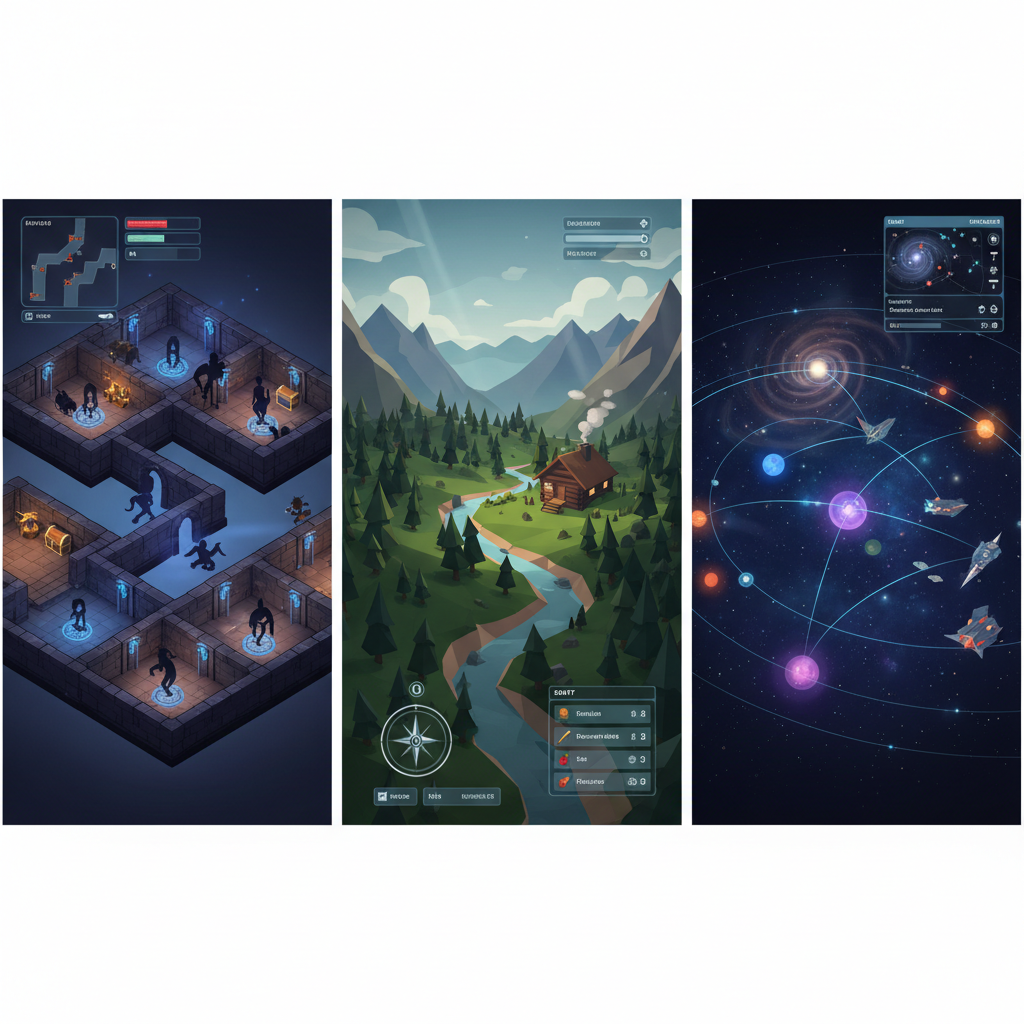
This list focuses on games that have already proven the “one more run” effect, plus a few newer picks that look especially strong for 2026 based on their systems design and community momentum. You’ll also get a quick way to choose what fits your mood, and a few practical settings to tweak so the randomness feels fair.
What “procedural generation” really means in 2026 (and why you should care)
Procedural generation is a broad umbrella, and the label alone tells you almost nothing about whether you’ll enjoy the game. In practice, most “top games with procedural generation 2026” fall into a few patterns.
- Layout generation: levels, rooms, dungeons, or planets change each run, common in roguelikes.
- Loot and enemy tables: what you find and fight shifts, even if the map stays similar.
- World simulation: terrain, weather, ecology, factions, or economies evolve, common in survival and sandbox titles.
- Hybrid approach: hand-crafted “anchors” plus generated connective tissue, often the best mix for pacing.
According to GDC (Game Developers Conference), procedural techniques are widely used to increase replayability and reduce manual content workload, but good results still depend on careful curation and playtesting, so “procedural” never guarantees “better.”
Quick comparison table: top procedural games by vibe
If you don’t want to read a long breakdown yet, use this as a fast filter. These picks span roguelike action, survival crafting, space exploration, and strategy.
| Game | Best for | What’s generated | Run length / session feel |
|---|---|---|---|
| Hades (and Hades II if you’re in early access) | Story + action with repeatable runs | Room layouts, boons, rewards | 20–40 min runs, very readable |
| Returnal | High-skill shooters with tension | Biome layout, item drops, modifiers | Medium runs, intense focus |
| Dead Cells | Fast roguelite platforming | Level routing, weapons, affixes | Quick sessions, huge variety |
| No Man’s Sky | Exploration + base building | Planets, fauna, flora, points of interest | Chill sessions, self-directed |
| Minecraft | Creative sandbox and survival | World terrain, structures, loot | Any length, social-friendly |
| RimWorld | Emergent storytelling strategy | Maps, events, characters, outcomes | Long campaigns, deep management |
| Dwarf Fortress | Simulation depth and weird stories | World history, civs, geology, events | Long-form, steep learning curve |
| Slay the Spire | Deckbuilding with clean systems | Card rewards, relics, map nodes | 30–90 min runs, strategic |
The shortlist: top games with procedural generation 2026 worth your time
This is the part most people want: a curated list, with the “why” spelled out. Not every procedural game needs infinite content, it needs meaningful variation.
Hades / Hades II
If you want procedural runs without losing narrative momentum, Hades remains a benchmark. The generation mostly serves pacing, it rarely undermines clarity, and your build choices feel intentional rather than luck-driven.
- Why it works: controlled randomness, excellent readability, reward loops that respect your time.
- Who might not love it: players who want open-ended exploration over run-based structure.
Dead Cells
Dead Cells is still one of the cleanest examples of “procedural, but learnable.” You can recognize patterns, route smarter, and improve, even though the exact path changes.
- Why it works: high weapon variety, rerouting decisions, skill expression.
- Heads-up: difficulty can spike if you chase “optimal” routes too early.
Returnal
Returnal uses procedural biomes to keep tension high, but it’s not “anything goes” random. Enemy compositions and loot drops create stories, especially when you’re learning how to stabilize a run.
- Why it works: atmosphere, combat flow, risk-reward rooms.
- Who it fits: players who enjoy repeating challenges with higher mechanical demands.
Slay the Spire
For many people, this is the procedural game that never truly runs out. The generation is tight, the decisions are legible, and you can usually point to a mistake rather than blaming “bad RNG.”
- Why it works: synergy-driven builds, strategic map pathing, fair randomness.
- Tip: treat early picks as “direction,” not as a full identity.
No Man’s Sky
Procedural planets can be repetitive if you binge the same activity, but No Man’s Sky shines when you play it like a travel diary: short goals, frequent pivots, a little base building, then move on.
- Why it works: sheer scale, exploration loop, sandbox freedom.
- Reality check: generated content sometimes means “variations on themes,” not bespoke quests.
Minecraft
It feels obvious, but Minecraft still belongs on any 2026 list. The procedural world is a canvas, and the game becomes whatever your server, modpack, or personal project turns it into.
- Why it works: emergent goals, social play, mod ecosystem.
- If you bounce off: try a curated modpack that adds progression and structure.
RimWorld
RimWorld isn’t “procedural levels,” it’s procedural drama. Colonists, events, and systems interact, and the best moments are often the ones you never planned.
- Why it works: story generator feel, customization, strong AI event pacing (with the right storyteller settings).
- Heads-up: it can be emotionally punishing if you get attached to every pawn.
Dwarf Fortress
If you want the deepest version of procedural history and simulation, Dwarf Fortress is in a league of its own. It’s not for everyone, but it’s hard to beat for “this world exists without me” vibes.
- Why it works: worldgen depth, emergent legends, sandbox storytelling.
- Barrier: learning curve, UI expectations, patience required.
Why procedural games sometimes feel “random in a bad way”
People blame RNG, but the frustration usually comes from a few predictable issues. If you’ve tried top games with procedural generation 2026 picks before and quit, this section may explain why.
- Too much variance too early: if the game decides your fate in the first five minutes, it feels unfair.
- Low readability: when items, enemies, or rooms don’t telegraph risk, you can’t make informed choices.
- Run length mismatch: long runs amplify bad luck, short runs forgive it.
- Meta progression that overcorrects: grinding can turn “skill growth” into “numbers patching.”
- Repetition disguised as variety: different layouts, same few encounters, same outcomes.
According to IEEE (Institute of Electrical and Electronics Engineers), procedural content generation research often emphasizes constraints and evaluation, because unconstrained randomness tends to produce lower-quality or less coherent results, which is exactly what players describe as “messy RNG.”
Self-check: which procedural game style fits you?
Use this as a quick diagnostic before you buy or reinstall something. You’ll get better results matching the generation style to your tolerance for uncertainty.
- I want clear improvement and short runs: look at Dead Cells, Hades, Slay the Spire.
- I want high tension and mastery: Returnal-style action roguelites often click.
- I want exploration without a strict endpoint: No Man’s Sky, Minecraft.
- I want stories from systems: RimWorld, Dwarf Fortress.
- I hate losing progress: prioritize games with strong meta progression or sandbox persistence.
Practical tips to make procedural runs feel fair (not chaotic)
You can often “fix” a procedural game experience with a few small choices, even without mods. This is the part people skip, then decide the genre is not for them.
- Lower the cognitive load: turn on damage numbers, enemy outlines, or aim assist if the game offers it, learning comes faster when feedback is clear.
- Pick one goal per session: new weapon testing, one boss attempt, one base expansion, not all at once.
- Stop chasing perfect runs: in many top games with procedural generation 2026 contenders, “good enough” builds win more reliably than greedy builds.
- Adjust difficulty honestly: if you’re repeating the first zone for hours, the run structure may be punishing your learning curve.
- Use seeded worlds when available: if a game lets you replay a seed, it’s a great training mode without killing variety.
If you play on PC, mods can help, but try to avoid turning every inconvenience into a mod hunt. A couple of quality-of-life changes beats a full overhaul that breaks the intended balance.
Key takeaways (so you can decide fast)
- Procedural generation is a tool, not a genre, and “more random” rarely equals “more fun.”
- If you want consistent improvement, pick games with readable systems and shorter runs.
- If you want emergent stories, strategy simulations tend to deliver stronger “only in this run” moments.
- When a game feels unfair, the cause is often variance + unclear feedback, not your skill alone.
Conclusion: the best procedural game is the one you’ll actually stick with
The smart way to use a “top games with procedural generation 2026” list is to pick one game for your current mood, not the one with the biggest name. A tight roguelite run feels great after work, a sandbox world feels better on weekends, and a deep simulation hits when you want a longer project.
If you want one simple action step, choose one game from the shortlist, set a small goal for your first two sessions, and only then decide whether the procedural loop feels like variety or just noise.
FAQ
What are the best top games with procedural generation 2026 for beginners?
Many beginners do well with Hades or Slay the Spire because the systems stay readable, runs teach you quickly, and losses still feel like progress rather than wasted time.
Do procedural games mean infinite content?
Not really. Many games recycle building blocks, so you get recombination rather than limitless handcrafted variety, the goal is replayability, not endless novelty.
Why do some procedurally generated levels feel repetitive?
Usually the encounter pool is small, or the game uses the same “beats” in different shapes. If enemies and rewards repeat, changing the room layout alone won’t save it.
Are roguelikes the same thing as procedural generation?
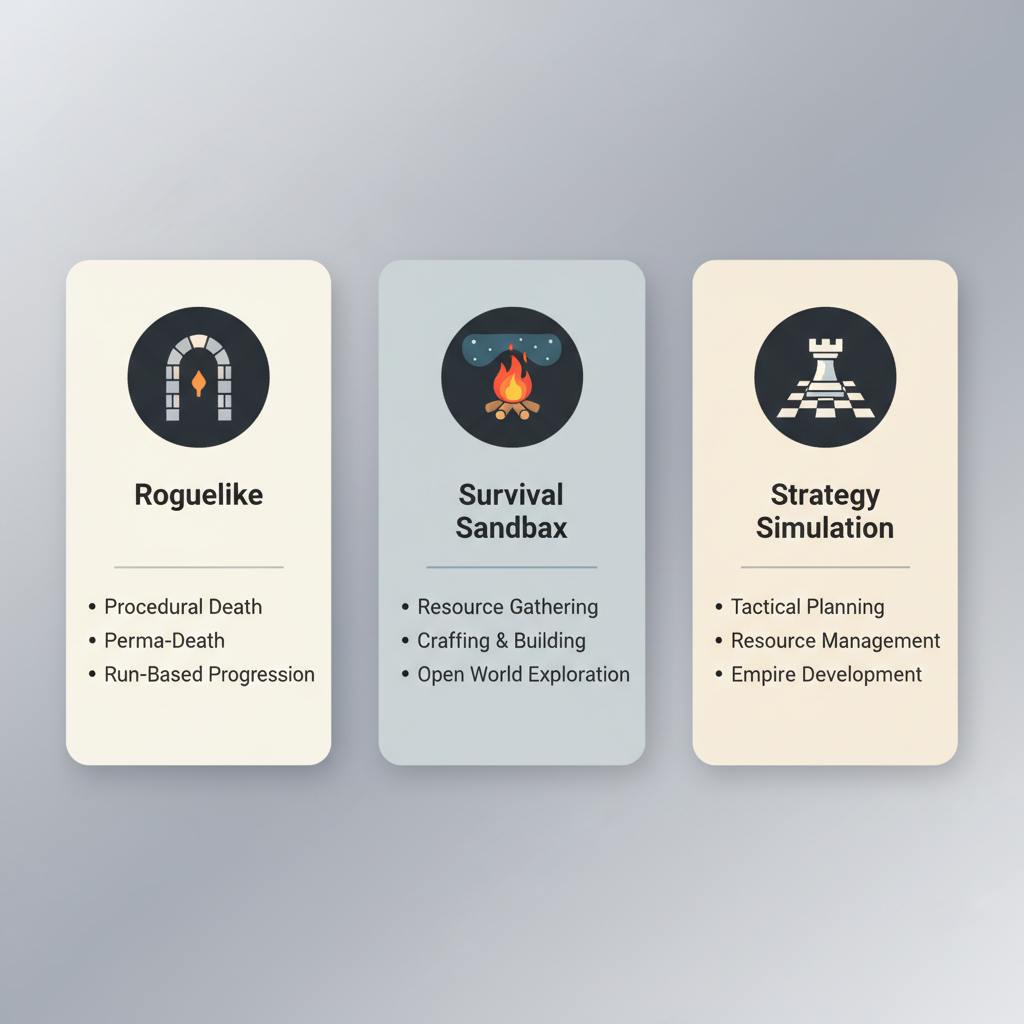
No. Roguelikes often use procedural layouts, but plenty of procedural titles are sandboxes or simulations, and some roguelites rely more on randomized loot than on generated maps.
Which procedural games are best if I hate losing progress?
Sandbox games with persistent worlds like Minecraft, or progression-heavy roguelites that unlock permanent upgrades, often feel less punishing than pure “start from zero” designs.
Is procedural generation “better” on PC than console?
The core experience is usually similar, but PC can offer mods, community seeds, and UI tweaks that make experimentation easier, which can improve how fair the randomness feels.
How can I tell if a game’s RNG is unfair or I’m just learning?
If you can’t explain why you lost, it’s often a readability issue, if you can explain it but can’t avoid it over time, the variance may be too high for the run length.
If you’re trying to pick among top games with procedural generation 2026 options and you want a quicker match to your play style, it often helps to describe what you enjoyed and what you bounced off before, then narrow to one “run game” and one “chill world” instead of buying five and abandoning four.