
online board games digital version choices usually fall into two camps: faithful “tabletop” adaptations and faster, video-game-like reimaginings. If you just want a fun night with friends, that sounds simple, but the wrong pick can turn into awkward tutorials, mismatched expectations, or a rules argument that kills the vibe.
It’s worth sorting out because digital board games now cover everything from quick party sessions to serious, strategy-heavy leagues. The best experience depends less on “what’s popular” and more on who you’re playing with, what devices they use, and how much rules friction your group tolerates.

There’s also a common misunderstanding: “digital version” doesn’t automatically mean “easier.” Some ports keep every edge case and timing rule, while others streamline so aggressively they stop feeling like the original. This guide helps you tell the difference, pick the right format, and set up a session that actually starts on time.
What “Digital Version” Can Mean (and Why It Changes the Experience)
In practice, “digital board game” can describe several product styles, and they behave differently once real people join a lobby.
- Faithful adaptation: tries to mirror the physical game, including turn structure, phases, and sometimes expansions.
- Rules-enforced version: a faithful adaptation where the app prevents illegal moves, often the sweet spot for mixed-skill groups.
- Video game interpretation: keeps the theme and core loop but changes pacing, RNG, timing, or win conditions.
- Companion or hybrid app: supports the physical game (setup, hidden roles, narration) rather than replacing it.
If your group values “it should feel like the box,” you want the first or second type. If your group values speed, spectacle, or shorter sessions, the third can be a better social fit, even if purists complain.
Why People Switch to Online Board Games (Real-World Reasons)
Most players don’t search for an online board games digital version because they’re bored with cardboard. They switch because the friction adds up.
- Scheduling: remote friends, time zones, or “we can only play after the kids are asleep.”
- Setup and teardown fatigue: big games are fun, but the table time cost is real.
- Rule policing: a good digital implementation removes arguments about timing windows and “can I do that?” moments.
- Accessibility: tutorials, zoom, colorblind modes, and readable UI can help, though quality varies.
- Experimentation: trying before buying the physical box, or exploring expansions without storage pain.
According to Entertainment Software Association (ESA), video games remain a mainstream form of entertainment across age groups in the U.S., which helps explain why “board game as software” no longer feels niche.
Quick Self-Check: Which Digital Format Fits Your Group?
Before you buy or subscribe, answer these quickly. Your “yes” pattern tells you what to prioritize.
- Do you have one rules-expert who always teaches? If not, rules enforcement matters a lot.
- Does anyone play on a phone only? Then UI scale and turn timers matter more than graphics.
- Do people quit when sessions go past 60–90 minutes? You may want streamlined modes.
- Is your group sensitive to luck swings? Look for versions that clearly expose probabilities and avoid hidden RNG.
- Do you care about “table feel,” like talking and negotiating? Voice chat integration and clear turn signals help.
If you’re stuck between two options, use a simple tie-breaker: pick the one that makes it easiest for the least-experienced player to take a legal, meaningful turn.
Digital Board Game vs Video Game Version: Key Differences
Here’s the part most buyers wish they’d clarified earlier: a “digital version” can be accurate while still feeling slow, and a “video game version” can be fun while no longer being the same game.
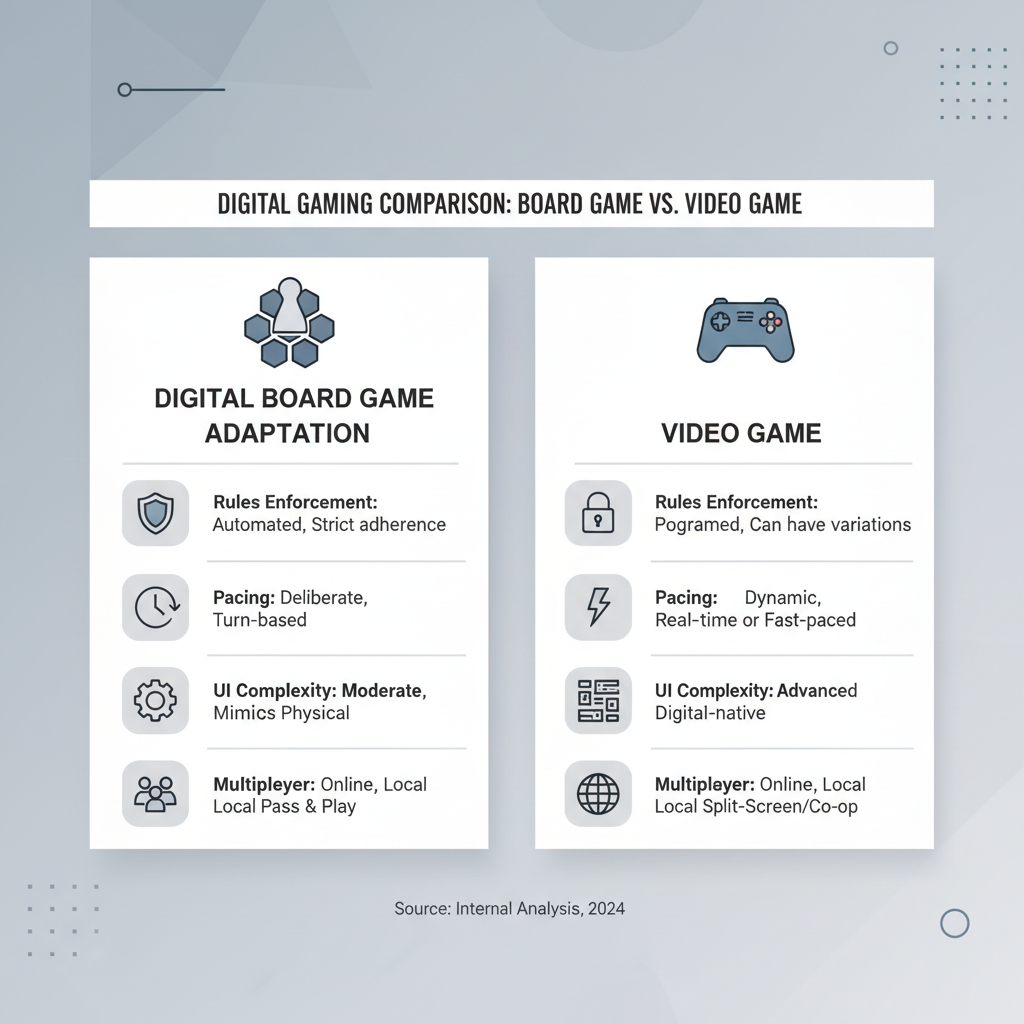
At-a-glance comparison table
| What you care about | Faithful digital adaptation | Video game version |
|---|---|---|
| Rules accuracy | High, often identical to tabletop | Varies, may simplify or redesign |
| Learning curve | Can be steep if UI mirrors complexity | Often smoother tutorials, more guidance |
| Session length | Similar to tabletop, sometimes longer online | Often shorter, built for repeat matches |
| Social negotiation | Depends on chat tools and clarity | Sometimes reduced if action is faster |
| Competitive balance | Relies on original design, patches less common | More likely to patch balance frequently |
How to Choose a Good Online Board Games Digital Version (Practical Checklist)
Store pages rarely tell you the stuff that matters at 10:30 p.m. when someone can’t find the “end turn” button. This checklist tends to predict whether your first night goes smoothly.
- Cross-play: Can Steam players join console players, or desktop join mobile? If not, friction spikes fast.
- Async support: Turns over hours or days, helpful for busy groups.
- Rejoin and reconnection: Real life interrupts, and unstable Wi‑Fi happens.
- Clear turn state: Who acts now, what actions remain, and what’s pending.
- Undo policy: Some versions allow limited take-backs, others lock instantly; decide what your group prefers.
- Accessibility basics: readable text, colorblind-friendly palettes, scalable UI.
According to World Wide Web Consortium (W3C), accessible design improves usability for many people, not only those with disabilities. In board game UIs, that often translates into clearer icons, better contrast, and fewer “what am I looking at?” moments.
Setup That Actually Works: A Simple Playbook for Game Night
Once you pick a title, the next failure point is coordination. The trick is to reduce the number of decisions happening live.
1) Decide the “rules posture” before you launch
- Chill mode: take-backs allowed, open hands in early rounds, no timers.
- Standard mode: normal rules, timers off unless someone stalls.
- Competitive mode: ranked or ladder, timers on, no coaching.
Say it out loud in chat. It prevents the classic mid-game conflict where one person assumes casual learning and another assumes tournament etiquette.
2) Run a 10-minute “UI lap”
Pick a practice match or tutorial and focus only on the interface: where actions live, how to confirm, how to read logs. This feels boring, but it saves 30 minutes later.
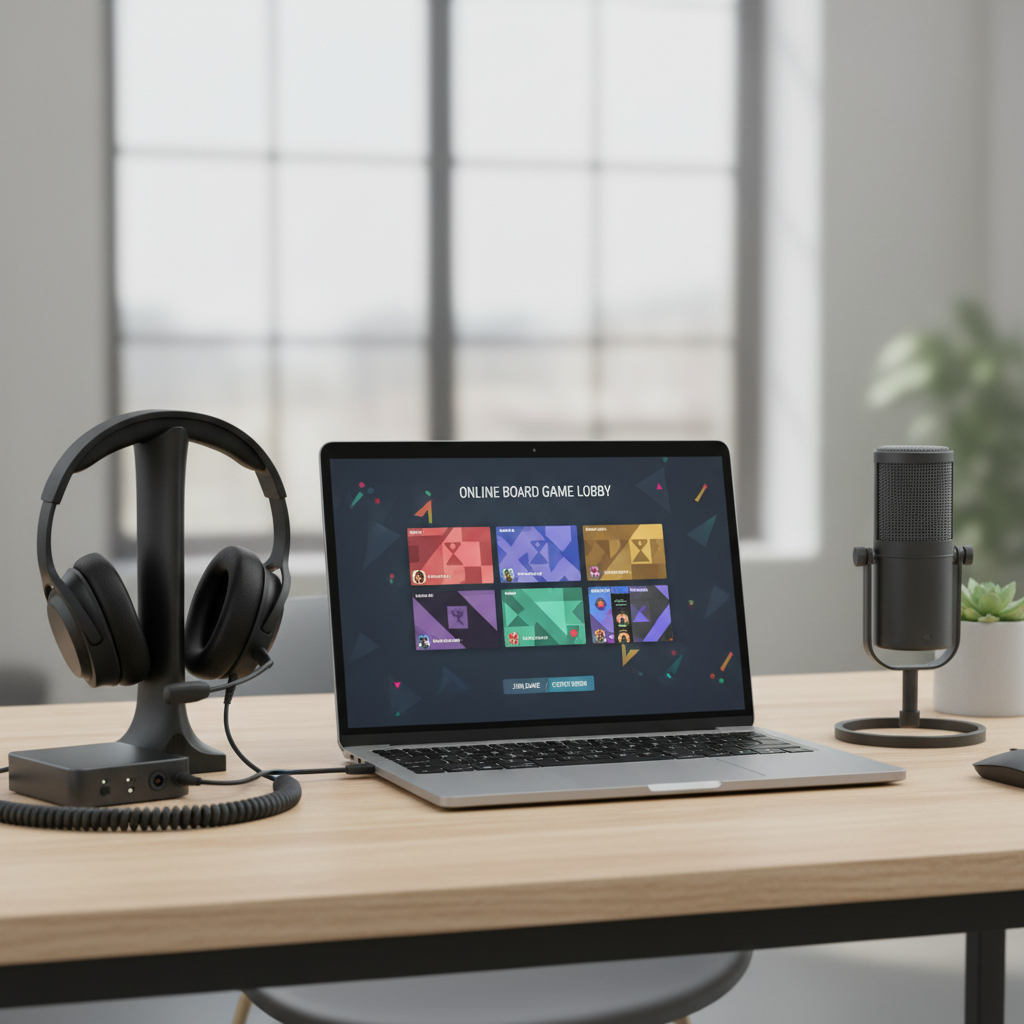
3) Use voice for negotiation-heavy games
If the design includes bargaining, alliances, or hidden intent, text chat often slows pacing and creates misunderstandings. Even basic voice makes the online board games digital version feel more like a table.
Common Mistakes That Make Digital Board Games Feel Bad
A lot of “this game is worse online” complaints come from fixable choices.
- Choosing complexity too early: start with a smaller ruleset, then scale up once everyone trusts the UI.
- Ignoring device constraints: a tiny phone screen plus dense iconography turns strategy into squinting.
- Assuming everyone learns by reading: many players need a live walkthrough, not a rulebook PDF.
- Letting timers dictate mood: timers can help, but they also punish new players; use them intentionally.
- Mixing strangers and friends immediately: public matchmaking can be great, but it also introduces skill gaps and etiquette differences.
When to Seek More Help (and What “Help” Looks Like)
If your group keeps bouncing off the same title, it’s usually not a character flaw, it’s a mismatch. “Help” can be as simple as switching versions or settings.
- If UI readability causes headaches or eye strain, consider a different platform or accessibility settings, and if symptoms persist, consult a healthcare professional.
- If rules disputes keep happening, prioritize rules-enforced implementations and games with strong action logs.
- If someone feels excluded due to device limits, pick a title with solid mobile UX or go async.
Also, if you’re buying for a group, don’t be shy about testing a demo, watching a full match video, or doing one “trial night.” That’s not overthinking, that’s preventing churn.
Key Takeaways and What to Do Next
If you want online play to feel smooth, focus less on hype and more on fit. A strong online board games digital version choice matches your group’s devices, patience for learning, and desired pacing, and it minimizes moments where the app becomes the opponent.
- Action step 1: decide whether you want a faithful adaptation or a faster video-game-like version, then shop within that lane.
- Action step 2: run a short UI practice session before your first “real” match, especially with new players.
If you need a more hands-off path, pick a rules-enforced digital adaptation with cross-play and async options, then keep your first night short and friendly.
FAQ
What’s the difference between an online board game and a digital board game?
“Digital” usually means the game exists as software, while “online” means you can play with others over the internet. Many titles are both, but some digital versions are offline-only or pass-and-play.
Is an online board games digital version always identical to the physical game?
Not always. Some are faithful ports, others change timing, components, or balance for pacing. It’s smart to check whether the publisher positions it as an adaptation or a reimagined video game version.
What should I prioritize for casual weekly game nights?
Cross-play, easy rejoining, and clear turn prompts usually matter more than high-end graphics. If your group has mixed experience, rules enforcement helps keep things light.
Are video game versions “worse” than faithful digital adaptations?
Not inherently. They can be better for shorter sessions or players who dislike long downtime. They’re “worse” only if your expectation is to replicate tabletop exactly.
How do I avoid rules arguments when playing online?
Choose implementations with strong logs and automated rules checks, and agree on a take-back policy before the match. That one small agreement prevents most friction.
Do I need voice chat for online board games?
No, but it helps a lot for negotiation-heavy designs. For puzzle-like or low-interaction games, text chat or even no chat can be perfectly fine.
What if one friend only has a phone?
Either pick a game known for a clean mobile UI or run async matches. For dense strategy ports, phones can work, but your group may need longer turn timers and more patience.
How can I tell if a digital version is beginner-friendly?
Look for interactive tutorials, tooltips that explain icons in plain language, and a practice mode against AI. If the first 15 minutes feel like menu wrestling, that’s a warning sign.
If you’re trying to find an online board games digital version that your group will actually return to, start by listing devices, preferred session length, and tolerance for rules learning, then narrow down to titles that match those constraints instead of chasing whatever looks flashiest.