
how to get better at fortnite building usually comes down to one thing: making your hands repeat the same few building decisions until they happen without thought.
If you only “free build” for a few minutes and jump into matches, you often improve slower than you expect, because the builds you need in fights are specific: quick cover, clean edits, and controlled piece placement under pressure.
This guide breaks building into a small set of skills you can actually practice, how to tell what you’re missing, and a weekly routine that fits real life. I’ll also point out common traps like chasing flashy high-ground retakes when your basics still leak.
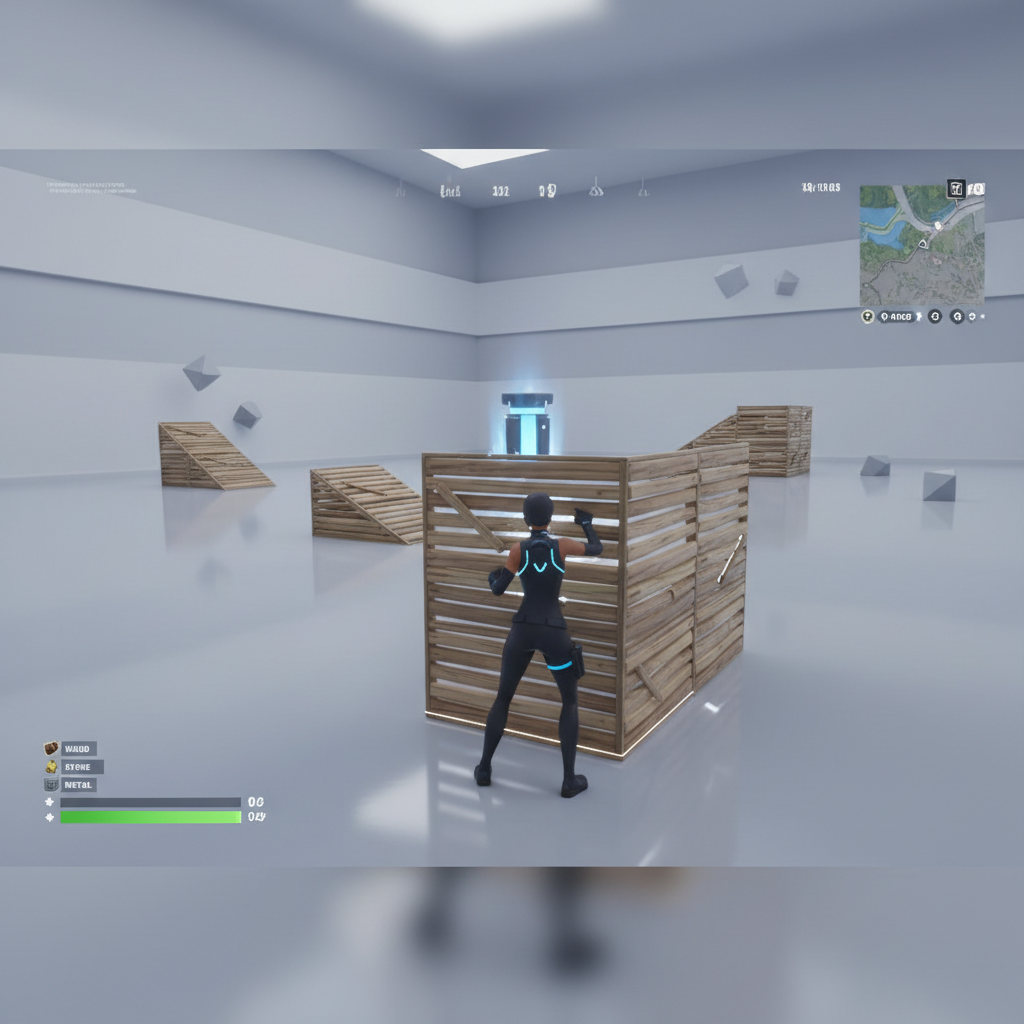
Start with the real building goal: survive and control space
In real fights, building is less about “building tall” and more about buying time, blocking damage, and taking a better angle. If you keep that lens, your practice becomes obvious: you want fast, reliable structures that appear where you intend, not just fast inputs.
According to Epic Games, Fortnite includes features like Builder Pro and advanced controller options to help players place structures more efficiently, which is a hint at the intended direction: fewer menu steps, more direct placement.
- Defense: instant wall, ramp, and roof placement to stop incoming shots.
- Mobility: ramps, protected pushes, and quick repositions.
- Control: boxing an area, claiming pieces, and editing safe openings.
If you want to know how to get better at fortnite building faster, keep asking: “Did that build reduce my risk and improve my angle?” If not, it might look cool but it’s not moving your win rate.
Dial in settings that make building feel consistent
A lot of players hit a wall because the game feels “slippery” or “clunky,” and they blame mechanics, when it’s really inconsistency from settings. Your exact numbers vary by platform and comfort, but the goal stays the same: predictable camera movement, low delay between intent and placement, and simple binds.
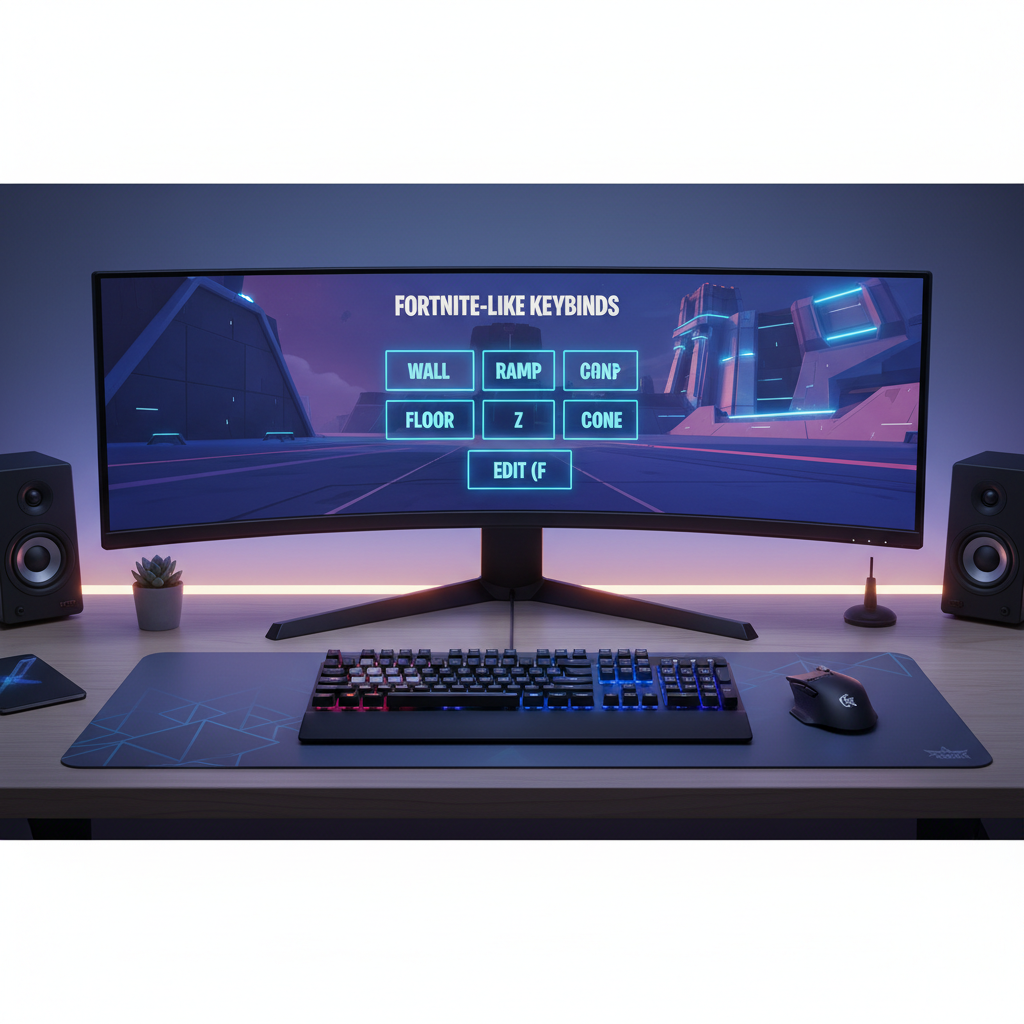
Quick settings checklist (practical, not obsessive)
- Bind access: you should place wall/ramp/floor/cone without taking fingers off movement keys (or without awkward controller hand shifts).
- Edit comfort: editing needs one clean input, not a finger gymnastics routine.
- Sensitivity balance: too high causes over-flicking and missed placements; too low makes you late on turns and coverage.
- Confirm edit behavior: pick the method that produces fewer “half edits” for you in stressful fights.
- Performance: stable FPS matters; building timing feels different when frames dip.
A simple rule: if you regularly place the wrong piece (like a ramp when you meant a wall), it’s rarely “you’re bad,” it’s often binds, timing, or camera control.
Self-test: figure out what you’re actually missing
Before you grind drills, get specific about your failure pattern. Most players don’t need “more building,” they need one missing link fixed, then everything suddenly clicks.
Run these self-tests in Creative for 10 minutes and be honest:
- Panic wall test: can you place a wall in front of you instantly, then a ramp behind it, without misplacing?
- Box test: can you make a full box (4 walls + floor + roof) while moving, without leaving gaps?
- Edit escape test: can you edit a door or corner, exit, and reset the wall quickly?
- Piece claim test: when someone is on the other side, do you tend to edit your own wall safely, or open yourself up?
What you’re looking for is the first thing that breaks under speed. That’s your training priority, not the most advanced technique you saw on TikTok.
Core mechanics to master (the few that matter most)
There are endless build moves, but the “base layer” is short. If you can do these reliably, you’ll feel a real jump in fights, especially in close range.
1) The instant cover sequence
The most useful micro-skill in the game is taking a shot, then instantly creating protection. Practice: wall in front, then ramp, then either a roof or a side wall depending on pressure. Keep it tight and repeatable.
2) Clean 90s, but only as a tool
90s help you gain height, but in matches you often need controlled height, not maximum speed. If your 90s leave open sides or you fall off, slow down until placements become automatic, then speed returns naturally.
3) Boxing and re-boxing
Boxing is your safety net. Re-boxing is what keeps you alive when the first box gets pressured. If you learn to move from one box to the next with minimal exposure, your confidence goes up fast.
4) Safe edits, not fancy edits
A “safe” edit gives you a shot while keeping cover. Window edits, right-hand peek edits, and quick resets win fights more often than big open doors that invite trades.
A simple 30-minute practice routine that actually transfers to matches
If you’re asking how to get better at fortnite building, consistency beats marathon sessions. A short routine you can repeat 4–6 days per week usually outperforms a single long grind.
30-minute structure (adjust as needed)
- 5 min: warm-up placements (wall/ramp/floor/cone) at medium speed, zero mistakes is the target.
- 10 min: box + re-box drills while moving, include at least one direction change each rep.
- 10 min: edit reps (windows, corner edits, reset timing), focus on clean crosshair placement.
- 5 min: “pressure reps” by adding a timer or practicing right after a short sprint in-game to mimic stress.
Key point: stop a drill when you’re reinforcing mistakes. Take 20 seconds, slow down, then restart clean.
Match habits that make your building show up when it matters
Plenty of players can build in Creative and still fall apart in matches because decision-making lags. You want a few default responses you can trust.
Use these building rules in fights
- After every shot taken, assume a return shot is coming and place cover before peeking again.
- Don’t overbuild early: two or three smart pieces often beat a messy tower.
- Reposition after damage: if you get tagged, re-box or change level instead of re-peeking the same angle.
- Chase control, not height: in many mid-game fights, owning nearby walls and roofs matters more than being one layer up.
Also, pick fights that match your current skill. If you hot-drop every game while learning, you’ll get repetition, but it can be chaotic repetition. A mix of controlled engagements and occasional chaos tends to teach faster.
Common mistakes that slow improvement (even for “good” builders)
- Speed-first mindset: you push faster inputs before accuracy, then wonder why pieces place wrong under pressure.
- Practicing only retakes: retakes look impressive, but your average fight needs boxes, re-boxes, and safe edits.
- Ignoring crosshair discipline: building is partly aim; if your crosshair floats, your placements drift.
- Never reviewing losses: one quick replay check can show the real issue, like an unprotected side.
Progress tracker: what “better building” looks like week to week
Improvement feels vague unless you track something concrete. Here’s a simple way to measure progress without turning Fortnite into homework.
| Skill | Beginner benchmark | Improving benchmark | What to practice next |
|---|---|---|---|
| Instant cover | Wall comes out late | Wall + ramp reliably | Add roof/side cover choices |
| Boxing | Gaps and misplacements | Clean full box while moving | Re-box under “pressure reps” |
| Edits | Slow confirm and resets | Fast edit + instant reset | Right-hand peek edit habits |
| Fight decision | Over-peek, take trades | Peek, shoot, cover rhythm | Piece control fundamentals |
Key takeaway: if you improve just one row per week, your building feels dramatically different within a month.
When to get outside help (and what kind actually helps)
If you’ve practiced consistently for a couple weeks and the same mistake keeps showing up, a small outside input can save time. Many players benefit from a friend watching their gameplay, or a coach reviewing one or two fights, not an entire VOD marathon.
- If you play on controller and feel limited, look for someone who understands controller-specific building and edit settings.
- If your issue is nerves and misinputs, you might need simpler “default responses,” not more techniques.
- If performance or input delay is suspected, consider basic troubleshooting and, if needed, ask a qualified technician for help with hardware settings.
Conclusion: make building boring, then make it fast
how to get better at fortnite building is not a mystery move, it’s repeating the small set of fight-relevant actions until they stop costing you mental energy. Keep your practice focused on instant cover, boxing, re-boxing, and safe edits, then carry two or three simple rules into real matches so the skill actually shows up.
This week, pick one weakness from the self-test, run the 30-minute routine four times, and watch one replay where you died in a build fight. That mix is usually enough to create noticeable change.
FAQ
- How long does it take to get better at Fortnite building?
Many players notice small improvements within a week if practice is consistent, but real comfort in fights often takes a few weeks because pressure changes everything. - Should I learn high-ground retakes to improve faster?
Retakes can help later, but if your boxes and safe edits still fail, retakes mostly become “extra buttons” that don’t win fights. - What’s the best way to practice building without getting bored?
Short, timed drills help, and rotating between placement, boxing, and edits keeps it from feeling like the same loop every day. - Why do I build well in Creative but panic in real matches?
Usually it’s decision speed, not mechanics. Bring two rules into games, like cover after every shot and re-box after damage, so your brain has defaults. - Is sensitivity the main reason I can’t build fast?
Sometimes, but not always. If you misplace pieces often, binds and crosshair control are just as likely to be the issue as raw sensitivity. - Do I need to learn piece control to be a good builder?
Piece control helps a lot in higher-skill lobbies, but you’ll get more immediate wins from reliable defense and clean edits, then add control gradually. - What should I focus on if I keep losing close-range build fights?
Start with re-boxing and safe peek edits. In many cases, surviving one extra second and taking one clean angle is the difference.
If you’re practicing but progress still feels random, you might prefer a more structured plan: a short daily drill list matched to your weakest building moments, plus a quick review checklist for your last few fights.